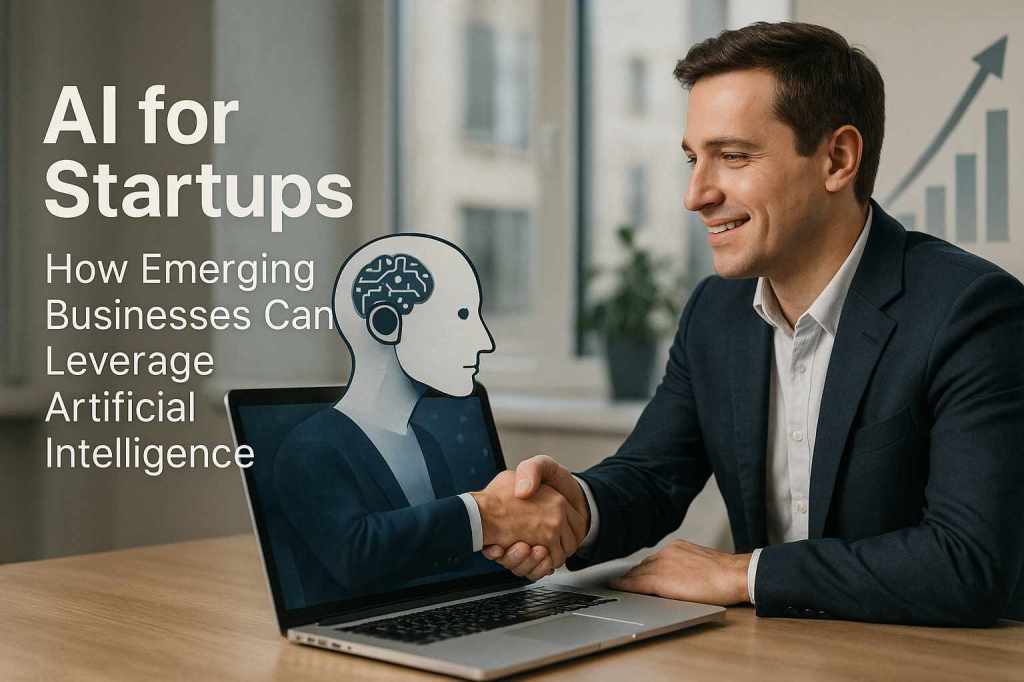
In today’s startup world, innovation isn’t just a competitive edge—it’s a survival strategy. As markets evolve and customer expectations rise, early-stage businesses must move faster, work smarter, and scale efficiently. One of the most transformative tools enabling this evolution is Artificial Intelligence (AI). Once limited to tech giants with massive budgets, AI is now available as a flexible, scalable solution for even the smallest startups.
That’s where AI development for startup services enters the conversation. Whether it’s building intelligent customer support systems, automating internal operations, or uncovering deep insights from user data, AI has become a key lever for fast, sustainable growth. For startups trying to do more with less, AI isn’t a futuristic concept—it’s a present-day catalyst.
But here’s the exciting part: You don’t need a team of data scientists or millions in funding to start leveraging AI. With the right strategy, tools, and focus areas, startups can integrate AI into their core operations and unlock massive efficiencies, smarter decisions, and more personalized customer experiences.
This guide will walk you through how startups can adopt AI effectively—step by step. From understanding core benefits to exploring real-world use cases, we’ll explore how emerging businesses can use AI not just as a tool, but as a growth partner. Whether you’re in SaaS, e-commerce, B2B, or another industry altogether, this roadmap will help you cut through the hype and build real value with artificial intelligence.
Why AI Matters for Startups
Startups operate in an environment that’s fast-paced, resource-constrained, and highly competitive. Unlike large enterprises, they don’t have the luxury of sprawling teams or long product cycles. Every decision, every hire, and every dollar counts. That’s exactly why AI is such a powerful ally for emerging businesses—it gives startups the ability to scale like larger companies, but without incurring the same overhead.
AI helps startups accomplish more with less. It accelerates routine tasks, reduces human error, and opens new doors for personalization, automation, and intelligence. From automating marketing campaigns to predicting customer behavior, AI adds intelligence across every touchpoint of a business. This allows startup teams to stay lean while delivering services that feel robust, responsive, and deeply personalized.
Another key reason AI is invaluable for startups is agility. Because AI can process and analyze data in real time, founders and decision-makers can respond to market shifts faster. Instead of guessing what users want or relying on outdated reports, AI helps teams adapt, pivot, and optimize continuously—key traits in any startup’s journey.
And finally, there’s the competitive advantage. Startups that adopt AI early can differentiate themselves through smarter products, more efficient processes, and better customer experiences. In industries where speed and innovation matter, being “AI-native” gives startups a major head start over slower-moving competitors.
- Operate like a larger company: AI empowers small teams to deliver enterprise-level outcomes.
- Adapt faster: Real-time data processing helps teams pivot and optimize quickly.
- Stretch resources: AI lets startups do more without ballooning costs or headcount.
- Outpace competitors: Early adopters can create smarter, more scalable offerings.
Core Benefits of AI for Startups
AI isn’t just about fancy algorithms or sci-fi scenarios. For startups, it delivers real, tangible benefits that directly impact growth, productivity, and user satisfaction. Whether you’re building a SaaS product, running an e-commerce site, or developing a B2B platform, AI can enhance how your business operates across the board. Here are three of the most powerful advantages startups gain from integrating AI early.
1. Operational Efficiency and Automation
Startups often struggle with limited bandwidth. Founders wear multiple hats, and repetitive tasks eat into time that could be spent on strategy and innovation. AI helps solve this problem by automating routine processes—freeing up resources and increasing consistency.
- Workflow Automation: AI tools can automate repetitive workflows such as data entry, invoicing, onboarding, and scheduling. Platforms like Zapier, Make, and UiPath allow startups to build low-code automations without technical complexity.
- Smart Scheduling and Resource Management: AI can optimize team calendars, assign tasks, and even predict potential delays based on project patterns.
- Document Processing: Natural Language Processing (NLP) enables AI to read and process large volumes of documents, extract key data, and categorize information instantly—eliminating manual data handling.
2. Data-Driven Decision-Making
Startups generate valuable data every day—through website activity, customer feedback, sales funnels, and user behavior. The challenge is making sense of that data in real time. AI steps in to convert raw information into clear, actionable insights.
- Predictive Analytics: AI models can forecast trends, user churn, demand spikes, and more—helping teams make proactive decisions.
- Visual Dashboards: AI-powered BI tools like Tableau or Power BI provide dynamic dashboards that update in real-time, helping startups monitor metrics without digging through spreadsheets.
- Automated A/B Testing: AI can analyze experiments faster and determine which variations deliver better engagement, conversions, or user retention.
3. Enhanced Customer Experience
Customer experience is a major differentiator for startups. In a world where customers expect instant responses and personalized service, AI enables startups to meet—and often exceed—those expectations.
- AI Chatbots and Virtual Agents: Platforms like Intercom, Drift, and Tidio allow startups to provide 24/7 support without increasing headcount. These bots handle FAQs, process orders, and escalate issues when needed.
- Behavior-Based Personalization: AI tracks user interactions and tailors product recommendations, emails, and in-app experiences based on individual preferences.
- Sentiment Analysis: AI tools can interpret customer reviews, emails, and social media posts to understand overall sentiment—allowing startups to adjust tone, messaging, and even product features in response.
Each of these benefits builds on the next. Efficiency fuels growth, data leads to smarter decisions, and great experiences turn users into loyal customers. Together, they make AI a powerful force in the startup playbook.
Key Use Cases for AI in Startups
AI isn’t a one-size-fits-all solution—it’s a toolkit with endless applications depending on your startup’s stage, industry, and pain points. Whether you’re trying to reduce operational friction or personalize your user journey, there’s likely an AI use case that can make it faster, cheaper, or better. Here are some of the most impactful ways startups are using AI today.
1. Customer Support
Providing fast, consistent customer support can be tough for startups with lean teams. AI-powered chatbots and helpdesk automation tools allow businesses to offer around-the-clock support without hiring large customer service departments.
- 24/7 Assistance: AI chatbots like Tidio, Freshchat, and Drift handle FAQs, process returns, and escalate complex issues to human agents. This reduces ticket volume while improving response times.
- Multilingual Support: NLP-based bots can converse in multiple languages—ideal for startups targeting global markets from day one.
- Smart Routing: AI analyzes incoming queries and assigns them to the best-suited team member, improving resolution speed and satisfaction.
2. Marketing and Growth
Marketing is critical to startup growth, but many teams don’t have the time or skills to manage complex campaigns. AI tools automate targeting, content creation, and lead nurturing—turning marketing into a scalable, repeatable engine.
- Predictive Targeting: AI analyzes user data to forecast which segments are most likely to convert. Tools like Clearbit or Optimove enable laser-focused campaigns that improve ROI.
- Automated Content Generation: AI copywriting tools like Jasper and Copy.ai can generate blog posts, product descriptions, email campaigns, and social media content—reducing creative bottlenecks.
- Email Personalization: Platforms like Mailchimp and ActiveCampaign use AI to send personalized email sequences based on user behavior, interests, and lifecycle stage.
3. Product and Feature Innovation
AI can help startups improve their product continuously through feedback, insights, and personalization. By analyzing how users interact with your product, AI tools can suggest new features or flag areas where users struggle.
- Behavior Analytics: Tools like Mixpanel or Hotjar track click paths, feature usage, and drop-off points. AI surfaces trends that would otherwise go unnoticed.
- Feature Recommendations: Machine learning can predict what features a user might want based on historical patterns, improving user engagement and retention.
- Dynamic UX Optimization: AI can personalize the layout, color scheme, or menu structure based on individual preferences and behavior.
4. Internal Automation
AI isn’t just for customer-facing processes—it’s just as powerful behind the scenes. By automating internal workflows, startups can reduce human error, speed up operations, and empower their teams to focus on high-value work.
- HR and Recruitment: AI tools like BreezyHR and HireVue screen resumes, assess candidate fit, and even schedule interviews automatically.
- Finance and Expense Management: Platforms such as Expensify or Zoho Expense use AI to scan receipts, categorize expenses, and flag anomalies.
- Inventory and Supply Chain: For e-commerce or logistics startups, AI can forecast inventory needs, predict delays, and optimize shipping routes.
These use cases demonstrate the versatility of AI—from front-end personalization to back-office automation. The best part? Many of these tools are plug-and-play, meaning you don’t need to build complex models from scratch. The key is choosing the right application for your current needs and scaling from there.
How to Implement AI in Your Startup
AI may sound complex, but implementing it in a startup doesn’t require a PhD in machine learning. What it does require is clarity, focus, and a phased approach. By starting small and building intelligently, startups can gain AI-powered advantages without draining resources. Here’s how to make AI work for your business—step by step.
1. Start Small and Strategic
One of the biggest mistakes startups make is trying to “AI everything” too soon. Instead, identify a single high-impact area—usually something repetitive or resource-heavy—and start there. The goal is to get a quick win that shows measurable value and builds confidence in AI’s potential.
- Identify pain points: Look for processes that are manual, time-consuming, or error-prone (e.g., email sorting, lead scoring, inventory tracking).
- Pick low-risk tools: Use pre-built AI tools that require no coding to get started. Platforms like Zapier, Notion AI, or Grammarly AI offer entry points with zero technical setup.
2. Blend Multiple AI Approaches
AI isn’t monolithic—there are different types suited to different tasks. Startups benefit most when they combine these approaches to create flexible, adaptive systems.
- Rule-based AI: Perfect for structured decisions—like automated email replies or workflow triggers. These follow clear “if-this-then-that” logic.
- Machine Learning (ML): Ideal for dynamic situations where data teaches the system—like fraud detection, price optimization, or user segmentation.
- Generative AI: Best used for content creation, ideation, and code generation. Tools like ChatGPT or GitHub Copilot fall into this category.
3. Integrate AI into Lean Startup Practices
The Lean Startup model focuses on fast iteration, testing, and learning. AI fits naturally into this approach because it can power MVPs, shorten feedback loops, and optimize every step of the customer journey.
- Build smarter MVPs: Use AI tools to validate product ideas quickly—generate mockups, landing pages, or chatbot prototypes without expensive dev work.
- Measure intelligently: Use AI-driven analytics to track how users engage with your product or site in real time.
- Learn and iterate faster: AI tools analyze patterns and trends from user data, helping you make evidence-based improvements much quicker than manual methods.
Implementation isn’t about building a massive AI engine on day one—it’s about embedding smart systems that amplify your team’s impact. Start with a narrow focus, then layer in complexity as you grow. This keeps costs low, reduces risk, and ensures AI remains aligned with your business goals.
Tools and Platforms to Explore
One of the best things about integrating AI today is that you don’t have to build everything from scratch. There are dozens of AI-powered platforms specifically designed for startups—many of them affordable, easy to use, and purpose-built to solve common business problems. Below are some of the most valuable tools categorized by function, so you can plug them directly into your startup’s workflow.
AI-Powered SaaS Tools for Startups
These platforms are great for automating marketing, business planning, content generation, and more:
- Jasper: An AI writing assistant for long-form blog posts, website copy, ad campaigns, and email content.
- Copy.ai: Ideal for fast, short-form content like headlines, product descriptions, and social posts.
- SurferSEO: Combines AI writing with SEO best practices to optimize blog content for Google rankings.
- Upmetrics: Helps startups build business plans, pitch decks, and financial forecasts using AI templates and prompts.
- ProAI: An AI co-pilot for entrepreneurs, guiding planning, ideation, and strategy generation.
Customer Support and Experience Platforms
AI-powered customer experience tools help you serve users better without expanding your headcount:
- Intercom: A customer support suite with AI bots, live chat, and proactive messaging built-in.
- Drift: Combines AI with conversational marketing to qualify leads and engage visitors in real time.
- Tidio: An affordable chatbot tool perfect for small startups needing 24/7 chat coverage on their website.
- Zendesk AI: Offers features like ticket triaging, AI-powered suggestions, and customer intent prediction.
AI for Analytics and Automation
Use these tools to make data-driven decisions faster and automate backend tasks:
- Notion AI: An AI-powered workspace that writes, summarizes, and organizes content inside your team wiki or docs.
- Zapier: Connects your apps and automates workflows based on triggers—no coding needed.
- Tableau and Power BI: Visualization tools with built-in AI analytics for real-time decision-making.
- ChatGPT: A general-purpose assistant for brainstorming, research, summarizing, coding, and more.
These tools don’t just save time—they add intelligence. They help you make better decisions, create better content, and deliver better experiences, even when your team is small. Many offer free tiers or startup discounts, making them accessible even on tight budgets.
Challenges and Considerations
While AI offers transformative potential for startups, it’s not a magic wand. It’s important to approach AI adoption thoughtfully—balancing speed with responsibility. Rushing in without awareness of the risks can lead to wasted effort, reputational damage, or legal trouble. Here are some of the key challenges startups should consider before and during AI integration.
1. Ethics and Bias
AI systems learn from the data they’re trained on. If that data contains bias—based on gender, race, geography, or other factors—the AI can inherit and even amplify it. For example, a hiring AI trained on biased historical data might overlook qualified candidates from underrepresented groups.
- Audit your data: Ensure your training data is diverse, inclusive, and accurately represents your audience.
- Use explainable AI (XAI): Choose tools that provide insights into how decisions are made so you can spot issues early.
- Set boundaries: Define what your AI should never do (e.g., make final decisions on hiring, loans, etc.) to ensure human oversight.
2. Compliance and Privacy
Data privacy laws are evolving quickly. Startups must ensure they’re not violating regulations like GDPR (Europe), CCPA (California), or other country-specific laws when collecting or using customer data for AI purposes.
- Get user consent: Always inform users how their data will be used and get clear consent, especially for AI-driven personalization.
- Store data securely: Use encrypted and compliant platforms to manage sensitive information.
- Work with legal advisors: Even if you’re a small startup, consulting a legal expert can help avoid future penalties.
3. Reliability and Trust
AI can be incredibly powerful—but it’s not perfect. Systems can make mistakes, fail silently, or produce inaccurate results. This makes it essential to treat AI as a co-pilot, not an autopilot.
- Test before scaling: Always pilot AI tools in a limited environment before rolling them out company-wide.
- Keep humans in the loop: AI should augment, not replace, your team. Maintain oversight, especially for sensitive decisions.
- Monitor continuously: Track how your AI tools are performing over time. Adjust models or switch tools if outcomes drift.
By anticipating these challenges and building safeguards into your strategy, you can unlock the full potential of AI while avoiding unnecessary risks. Responsible AI adoption isn’t just ethical—it’s smart business.
Real-World Examples of AI in Startups
Seeing how other startups apply AI can spark ideas and validate your direction. The great news is, AI isn’t just being used by Silicon Valley unicorns—startups across industries and geographies are building smarter operations, products, and services using AI tools. Below are a few inspiring examples of how startups are putting AI to work in the real world.
Wonderful (Customer Support – Global Scale)
Wonderful is a Tel Aviv-based startup focused on making customer service accessible in non-English markets. Instead of hiring massive support teams, they use AI agents trained in multiple languages to handle customer queries across time zones. Their system doesn’t just translate—it understands cultural nuances and provides context-rich responses.
- Result: Scaled global support with a lean team and improved customer satisfaction scores.
- Takeaway: AI can unlock new markets and reduce human workload without sacrificing quality.
Fresho (AI in Supply Chain & Sustainability)
Melbourne-based Fresho helps wholesale food suppliers reduce waste and manage inventory more efficiently. Their AI engine forecasts demand, adjusts supply levels, and prevents over-ordering—solving a problem that costs the food industry billions annually.
- Result: Reduced spoilage and improved order accuracy across hundreds of clients.
- Takeaway: AI can have a real-world environmental and financial impact—even in traditional industries.
UK SMEs (Small Business Adoption at Scale)
In the UK, thousands of small businesses have embraced AI tools to automate marketing, improve scheduling, and streamline operations. A local cafe might use an AI chatbot to handle reservations, while a small e-commerce brand uses AI to generate product descriptions and retarget ads with precision.
- Result: Significant time savings, better customer retention, and professional-grade marketing with minimal investment.
- Takeaway: You don’t need to be a tech company to benefit from AI—it’s industry-agnostic and scale-friendly.
Founder-Led AI Integration
Many early-stage founders are directly using tools like ChatGPT to draft investor pitches, analyze competitors, or even generate code snippets. This hands-on experimentation gives them a competitive edge and helps validate ideas faster without needing full-time engineers on day one.
- Result: Faster time to market, reduced outsourcing costs, and increased founder productivity.
- Takeaway: AI isn’t just for teams—it’s a powerful solo founder companion too.
These examples prove that startups of all sizes and sectors can use AI to move smarter, faster, and with more confidence. Whether you’re solving global problems or running a local operation, AI can play a meaningful role in your journey.
Strategic AI Roadmap for Startups
Adopting AI isn’t just about choosing the right tools—it’s about building a sustainable framework for innovation. Startups can move fast, but moving fast without direction often leads to dead ends. That’s why having a strategic roadmap for AI integration is crucial. It keeps your efforts focused, aligned with business goals, and optimized for ROI. Here’s a phased roadmap any startup can follow.
1. Assess Your Workflow
Start by mapping out your startup’s daily operations. Where are your bottlenecks? What tasks are repetitive or highly manual? What decisions could benefit from more data or automation?
- Tip: Look across marketing, sales, customer service, product development, and back-office tasks. Identify 3–5 pain points you’d love to eliminate or speed up.
2. Prioritize Use Cases by Impact and Feasibility
Not all AI applications are created equal. You want to focus on opportunities that are both easy to implement and likely to deliver measurable impact. For example, automating email follow-ups might deliver quick wins compared to building a custom AI product feature from scratch.
- Tip: Use a simple 2×2 matrix: High vs. Low Impact and Easy vs. Hard Implementation. Start in the “High Impact, Easy Implementation” quadrant.
3. Build a Prototype or Pilot
Once you’ve picked your first use case, build a lightweight prototype. Don’t overthink it—your goal is to test how AI performs in your environment. Many tools offer free tiers or trial plans that let you experiment without upfront commitment.
- Example: If you’re testing an AI chatbot, start by training it on a small set of FAQs and track user interactions for a week.
4. Measure and Iterate
Use clear KPIs to evaluate your pilot: Did it save time? Improve conversions? Reduce errors? AI is not “set it and forget it”—you’ll likely need to tweak inputs, retrain data, or update prompts as you go.
- Recommended Metrics: Time saved, cost reduced, customer satisfaction, engagement rate, error rate.
5. Scale and Establish Governance
Once you’ve proven the value of AI in one area, start scaling it across other departments. At this stage, you should also establish some light governance policies to ensure ethical use, data privacy, and accountability.
- Tip: Create a simple AI policy for your team. Define what tools are allowed, how data is handled, and who owns the results.
With a roadmap in place, AI becomes less overwhelming and more strategic. You avoid shiny object syndrome and focus instead on building lasting advantages into your startup’s DNA.
The Future of AI for Startups
Artificial Intelligence is not just a trend—it’s becoming a foundational layer in the modern startup stack. As AI tools become more accessible, intuitive, and affordable, the question is no longer whether startups should use AI, but how deeply they’ll embed it into their workflows, products, and culture.
In the near future, we’ll likely see startups structured differently. Many new companies will be AI-native from day one, meaning they’ll rely on intelligent systems not just as tools, but as integral “teammates.” Founders will use AI for ideation and market analysis. Product teams will co-create with generative AI to design user interfaces or write code. Customer support will be handled by agents that not only resolve issues but anticipate them proactively.
What’s even more exciting is the democratization of AI. No-code and low-code platforms are lowering the barrier to entry, allowing non-technical founders to build smart features and automations without ever writing a line of Python. As regulatory frameworks catch up, startups operating responsibly with AI will earn consumer trust faster—giving them a significant edge in competitive markets.
We’re also seeing the rise of ecosystem support: AI startup accelerators, government grants, open-source models, and corporate partnerships are creating fertile ground for early-stage ventures. This means founders don’t have to go it alone—they can leverage AI communities and resources to shorten the learning curve and accelerate go-to-market timelines.
- Prediction #1: Startups will embed AI into product development from day one—making it a core part of the value proposition, not just an add-on.
- Prediction #2: Investors will prioritize AI fluency—founders who can articulate how AI drives defensibility and scalability will win attention (and funding).
- Prediction #3: Teams will shift from traditional roles (e.g., “marketing manager”) to hybrid roles like “AI campaign strategist” or “automation lead.”
Conclusion
AI is not a future disruptor—it’s a present-day accelerator. For startups, it opens the door to smarter decisions, leaner operations, and better customer experiences. But like any powerful tool, its impact depends on how you use it. The most successful startups won’t just use AI to save time—they’ll use it to unlock new opportunities, personalize deeply, and outthink competitors.
Whether you’re a solo founder or a fast-growing team, now is the time to start exploring how AI can power your mission. Begin small, stay strategic, and let data and automation work alongside your hustle. Because in today’s market, speed matters—and AI helps you move faster, with purpose.

 AI Update